Perimenopause: Perils To Pearls

Did you know that in the past women were sent to asylums, given ovariotomies, lead acetate injections in their vaginas, and had their clitoris non-consensually removed to treat the so-called “disease” of menopause? (Heather Corinna, 2021) Even now, silence, shame, and lack of education, funding, and research around women’s health care still exists, and can lead to vicious cycles of anxiety, depression, and physical and emotional suffering of all kinds. Out of 450 billion dollars of healthcare funding in this country, only 1% goes to women over the age of 40. I recently attended a menopause summit where I had the chance to listen to some of the top doctors currently revolutionizing women’s health care share an urgent message: You may know more than your doctor. It’s not their fault, they were not properly educated on peri/menopause in medical school (they shared this was their own experience when receiving their educations!), and also, so much has changed. YOU HAVE TO ADVOCATE FOR YOURSELF. Bring your knowledge to your doctor if they are not bringing it to you. And if they are not open to working with you, FIND SOMEONE WHO IS. They encouraged attendees to share this message with as many women as possible, because information is power. “Look at your friends, and don’t let your friends suffer either.” -Dr. Mary Claire Haver, MD, author The New Menopause
All I could think as I listened to these heavy hitters bring forth disturbing statics and new solutions, was that I wish my mother and her generation could’ve had this knowledge during their transitions. The suffering that could have been prevented haunts me. I will be sure things are different for myself, and my daughter.
The most common thing these doctors said they hear from women when hormones start going haywire as perimenopause begins to unknowingly take over is: “I don’t feel like myself.” This transition can make us feel like our bodies are betraying us, or we don’t recognize ourselves anymore. Or that we have been tossed aside by society because our value has been lost along with our fertility–or god-forbid, our sex appeal. As I continue on this ride towards actual menopause feeling stronger and more balanced now armed with knowledge and options for support, I’m determined to do what I can so that it won’t always have to be that way. Doctors will try to throw women an antidepressant and send them on their way, but there is so much more we can do-for our current symptoms AND future brain and bone health.
“Misogyny is built into medical education.” -Dr. Sharon Malone (ob/gyn, menopause expert, women’s health advocate, chief medical advisor at Alloy Health, and author of NYT bestseller Grown Woman Talk).
I’ve gleaned many pearls of wisdom from my perilous perimenopausal pitfalls. I have learned so much about how to take care of my body, mind, and spirit thanks to this transition-from holistic care to hormone replacement therapy–all of which have fostered deeper self-love and compassion. But what I find helps the most, is knowing you’re not alone. Sharing our experiences is the ultimate form of healing and support. So I am called to share my own for whomever else may be going through (or supporting a loved one who is going through) similar issues. You are not crazy, this is real, you most certainly are not alone, and things can get better.
I began experiencing symptoms of perimenopause years before I understood what was happening to me. It took things getting really bad to open my eyes to the reality that–without realizing it due to lack of knowledge–perimenopause had begun a body/mind takeover, often leaving a trail of upset in its wake, while causing me to feel scared of or disappointed in myself. Without understanding there was a legitimate cause behind these extreme moments made me feel out of control.
No one ever warns you when you get pregnant around 30+ that you are timing your perimenopause perfectly with your teenager’s puberty, so hormones are currently all the rage in our home–pun intended.
There are so many symptoms women experience, but personally I have struggled with bone and joint pain due to loss of estrogen, insane night sweats, brain fog, and INTENSE mood swings.




The soaked sheets I was forced to change daily from INTENSE (sleep thieving) night sweats.

A warning sign for my flashes, temper, or sex drive, depending on the day. Or hour. Or minute really.
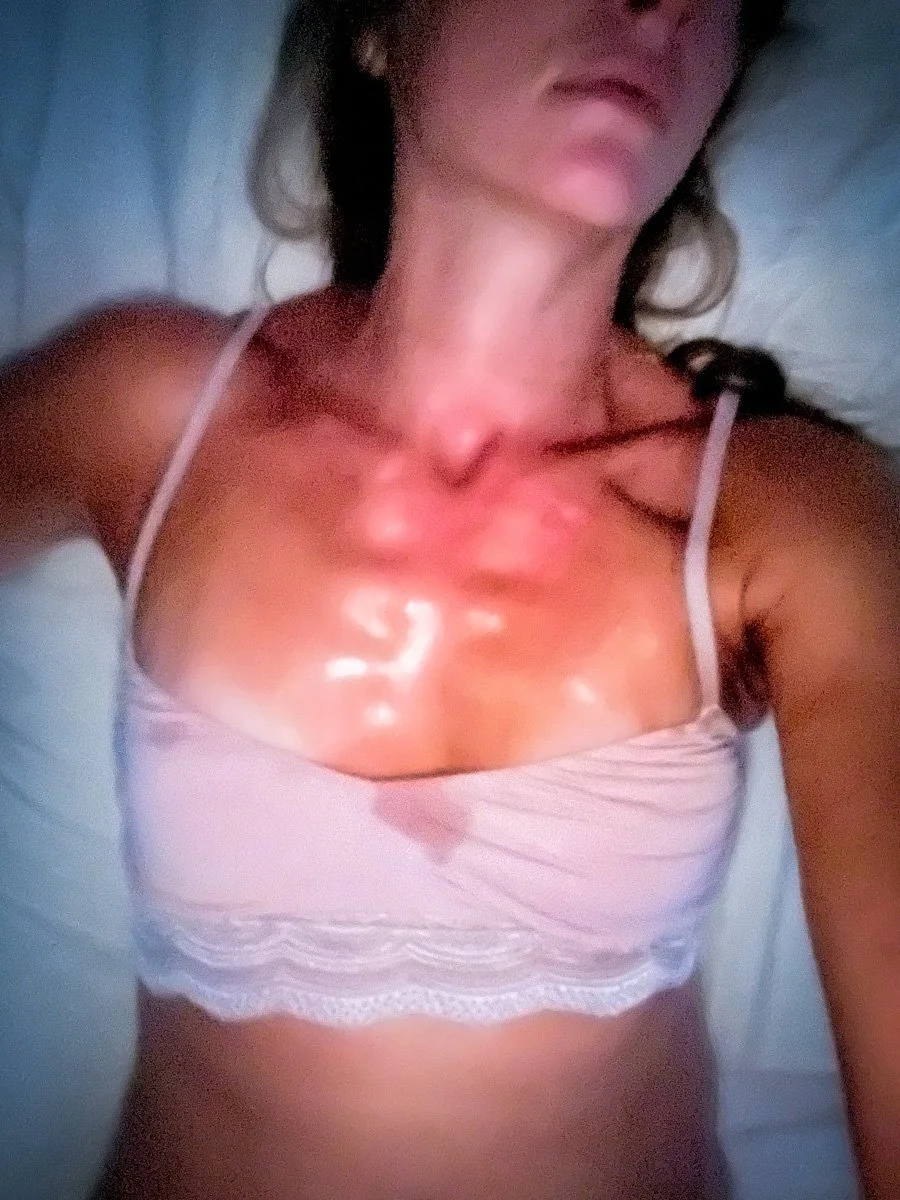

But the worst of it came in the form of some uninvited and very unwelcome visitors: panic attacks. Especially while trying to sleep. I am not someone to shy away from self-investigation, so I chose to look them dead in the eye and confront these episodes from all angles to eliminate other possible causes through talk therapy, energy work, spiritual guidance, and various medical check ups. Because we have to advocate for ourselves, our health, and our happiness. And I was, and still am, determined to keep my midlife experience an AWAKENING and not a CRISIS.
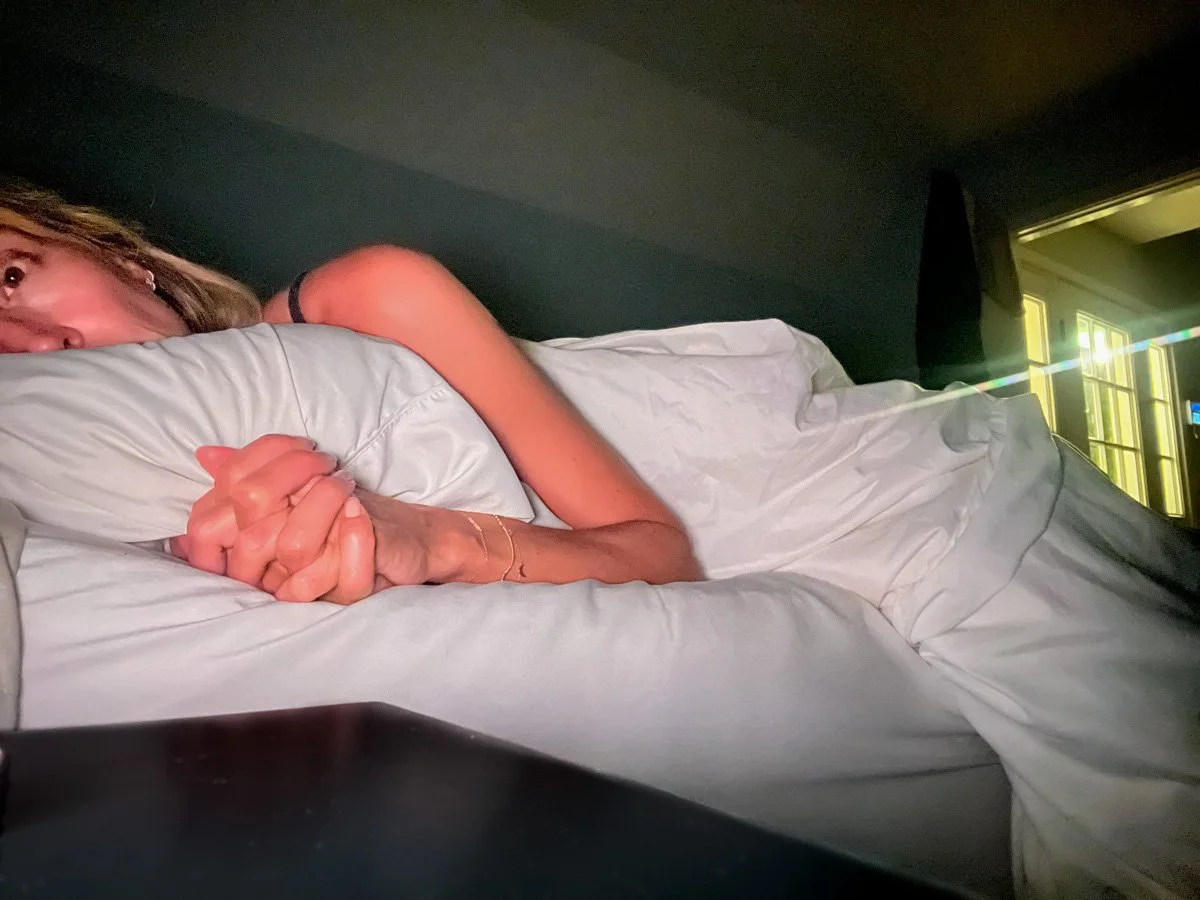
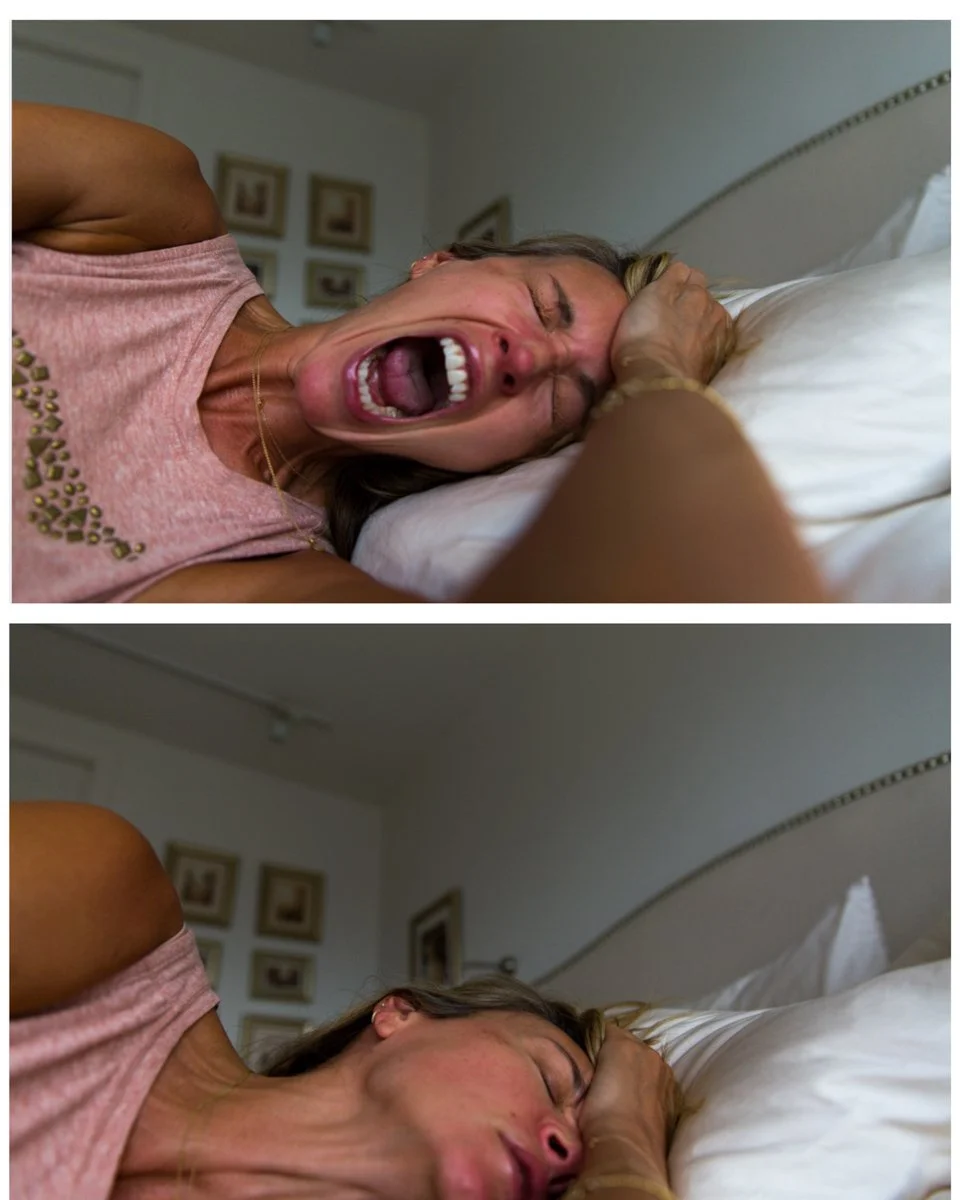
Panic attack survival position: Eventually I learned to hold my own hand, say I love you, and surrender to the fear.


So I learned to fall in love with my fear, and dance with my rage. And while I absolutely acknowledge some real life issues were causing heightened stress, I did in fact begin to notice there was a definite pattern based on my monthly cycle and ovulation. And while I am thankful for the deeper evolution of self that these heightened hormonal states incited, at the end of the day, knowing it was bigger than me was a relief. I was not in fact losing my mind.

While I’m still struggling with it at times, and will continue trying new options for care as my body keeps changing, I can say with certainty that with awareness comes less confusion, and therefore less fear. I am currently viewing it as an opportunity to connect intimately with myself instead. When I birthed my babies with no pain meds, I knew my body and I had to be in close communication and work together as a team to get through it. Instead of feeling betrayed by what I cannot control, I intend to conquer this right of passage with the same self-supportive mindset. By tuning in to and taking care of my body as best I can, while giving myself grace on the bad days.
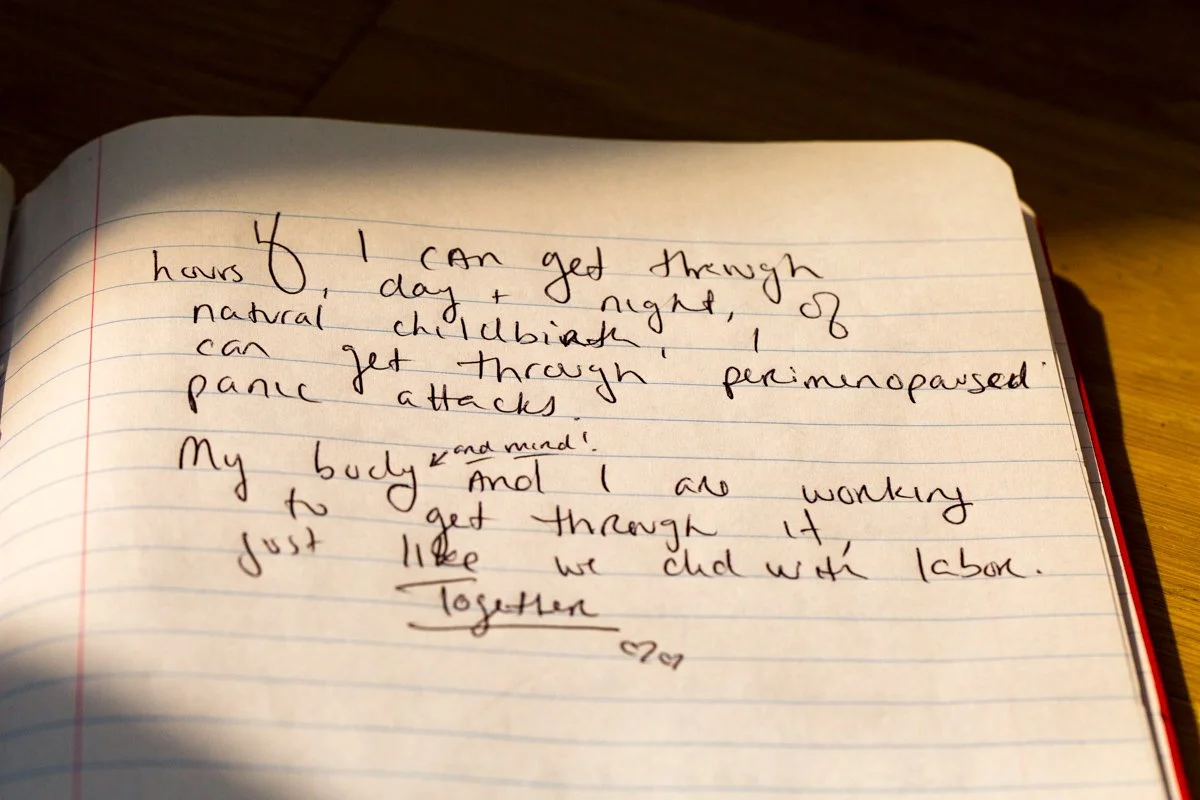
For a good year and a half after the panic attacks came on, I tried every natural option you can imagine: diet, exercise, supplements, therapy, meditation, energy work, you name it. I am very mindful about what I put in my body, and care a lot about being in tune with my natural cycle.

Perimenopausal packing.

I had been in physical therapy for months attempting to solve the mystery behind severe pain in my lower back and hips, when this little heart-shaped self-love reminder showed up on my table during one of my appointments. Things had gotten so bad, I could not stand for more than five minutes at one of my son’s soccer games anymore without pain, and nothing was helping. MRIs and x-rays did not show a cause. When I would mention I was in perimenopause, and based on my own research had learned that loss of estrogen could cause bone and joint pain, everyone I was seeing admitted they did not have enough knowledge in that area. The physical therapists politely nodded and tried more futile exercises, and the bone specialist said, “That very well could be the case, but I just don’t know enough about that” and proceeded to prescribe me pain relievers (that didn’t work), and said there was nothing more they could do. When I began receiving a steady dose of estrogen through the birth control pill a few weeks later, the pain disappeared almost immediately.

An ode to the long lost caffeinated life I left behind to combat heightened anxiety.
But while those holistic options have been beneficial to my life and are important to continue with, I came to the realization that I needed to do something more for my hormones. My doctor’s suggestion before starting HRT since I am not in actual menopause yet, was to go on low dose birth control to give my over-worked ovaries a rest, and receive a regulated amount of hormones daily. While it hasn’t been perfect finding the right pill that would agree with my uterus (continued breakthrough bleeding), the difference I have felt is undeniable and absolutely proved that the lack (and then sudden overflow) of steady doses of hormones that happens during the years leading up to menopause was absolutely the culprit for the emotional upheaval I had been feeling.


The night waking panic attacks I was having accompanied by insane night sweats have thankfully subsided for now. While I am still having shifting emotions (there is no magic pill!), they are more manageable and not the out of control rollercoaster ride of extremes they once were. I also noticed pain in my back months of physical therapy could not touch, suddenly be alleviated. This may not be the right path for every woman of course as all of our bodies and minds are different, but I believe it is helpful to know there are lots of options to try, and you do not have to sit back and suffer in silence. I have decided to rename my midlife awakening a midlife experiment for now. I was scared to try the pill to be honest, as I had a very bad reaction to it when I was younger, and didn’t like the idea of something controlling my body’s natural process. But I’m glad I found the courage to try it. Partly the perfectionist in me felt like a failure, but the truth was, this was not an act of giving up, but further empowering myself with choice. It showed me there was hope, and that I could handle whatever challenges come my way. The plan is to keep taking this steady dose of hormones for the next few years and hopefully coast right through menopause (I have heard many women who use IUD’s say they never even knew when their menopause happened because of this similar line of thinking). I’m not sure if this will be the final solution for me, only time will tell, but like the picture says, it’s a start.

But knowing I may never experience my natural cycle ever again brought up feelings of grief I did not see coming. I have had to accept my ovaries are slowly dying, yet amidst feelings of loss, I’ve also discovered a unique sense of comfort and hope in the realization that I can still birth from the sacred womb.
I recently received a message from beyond via my long time spiritual teacher that I would like to share (with respect and care for every woman who has gone through menopause, chosen not to reproduce, or–with the utmost sensitivity of all–struggled with infertility) that cuts through the societal pressures and expectations that make us falsely believe our value as women is attached to our ability (or implied duty) to bear children. The message came through for a friend that had just had a partial hysterectomy, but is relevant to many different reproductive experiences that often define feminine ideals: The womb is not just for birthing babies. It is also where we energetically birth our dreams and create the lives we want for ourselves. “Women are the creatrix.”
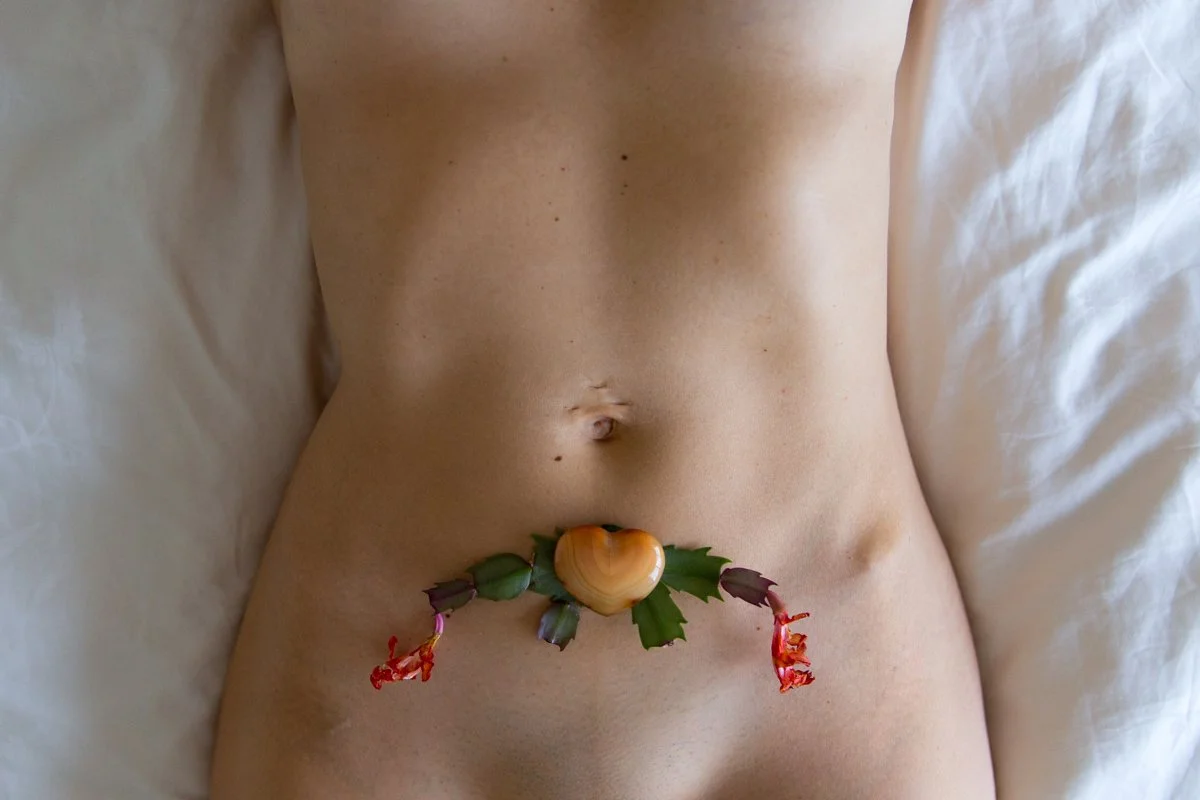
When I was deep in the thick of my perilous perimenopausal journey, and struggling severely with symptoms of all kinds, a trusted wise elder told me the story of her menopause. She shared she was able to go deep within herself, and command her body to be done menstruating. She suggested I do the same to end my suffering. Now, I can feel your disbelief and possible eye rolls as I write this, but hear me out. While I appreciate the faith she had in my spiritual power, and as much as I respect and admire hers, I can’t say I was confident that approach would work for me, but it was a pivotal conversation for me nonetheless. I never got as far as having that conversation with my body–not because I didn’t believe it was possible, but because of the strong sense of resistance I instantly felt go through me at the very idea of asking for my period to end once and for all. It became very clear to me in that moment that I did not identify with nor want to be officially in menopause, but why? At this point I thankfully had two children and had absolutely no desire to further reproduce. My PMS was insane, and I was being physically and mentally tortured by perimenopause. What was I holding on to?
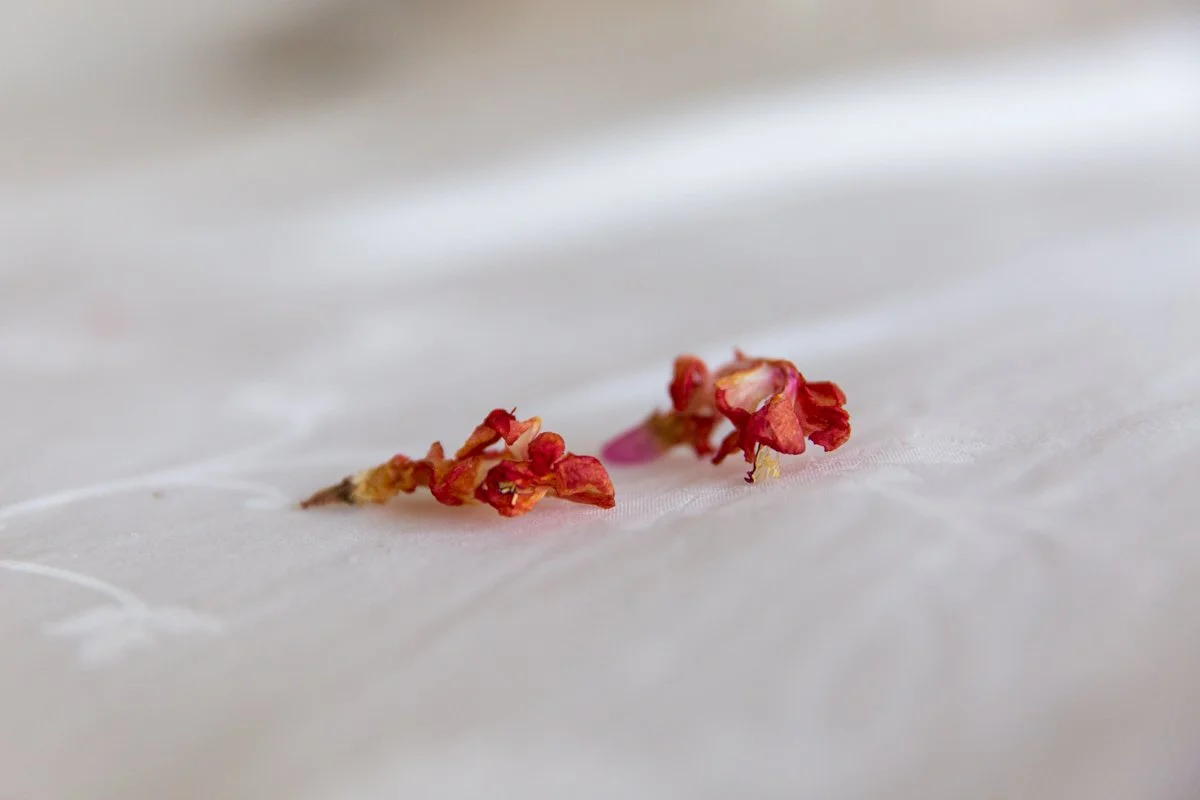
The answers slowly began to reveal themselves, and still are. This moment asked me to face ideals about womanhood I don’t consciously believe, yet there they were: the roadblocks ingrained into my subconscious preventing a peaceful path into this next phase of life built from the poisonous truths we women regularly swallow as we grow up internalizing the male gaze. As much as I practice purging the false narratives I have ingested since being born into a patriarchal society, with every stage of my feminine experience, another impossible expectation or unfair stereotype seems to surface. How could it not at this particular juncture, when our culture spoon-feeds us the idea that women are valued as either the pure and holy mother figure, or the over-sexualized tool for pleasure. If this is the case, then of what worth are we if we can no longer reproduce, or we now fall under the category of the stereotypical dried up, non-libido having woman in menopause? As uncomfortable as it is to admit I felt like I would be losing a super power if I could no longer be a man’s sexual fantasy or object of desire, honestly acknowledging that fact offered me an opportunity to shed an insidious layer of my being, and begin retelling a different version of a life-long story that no longer served me. And while struggles with libido and sexual dysfunction are very real during this time of life (as it is for men, yet they have had the privilege to not have their issues brushed under the table by the medical system, and have had more accessible treatment options offered to them for years!), I have found the opposite of the menopausal sexual stereotypes to be true as well. The most heightened states of sexual experience and pleasure occur when we are truly free enough to enjoy them, and liberation is the gift of midlife. With the new levels of strength, confidence, and self-awareness women achieve during this time (often a direct result of overcoming the struggles faced during this hormonal journey), we are no longer prioritizing performances put on for approval dictated by the male lens, but are focused on our true needs and desires instead, and that’s where the real fun begins–in and out of the bedroom. In actuality, what most people don’t realize is, many midlife women are awakening to an even deeper level of desire than we could have fathomed or understood in our younger years. There is a misconception that youth is where sexy resides. The truth is there is nothing sexier than a woman who knows who she is and what she wants, and that comes with age. In fact, midlife offers the moment when the life-long, people pleasing, performing act that gets confused with femininity can finally come to an end all together.
Midlife is complicated for women because both society and our own bodies do not allow us to age peacefully. We begin to feel invisible and undervalued. It seems unnatural and unfair that the age that a woman comes into her own, and is finally comfortable in her own skin, is the same age that society wishes to put her out to pasture. Why should we be told to cover up when we finally understand we have nothing to hide? Perimenopause provoked a deep dive into self-care and self-love that allowed me to discover a new sense of vitality, respect, and appreciation for womanhood that is essential to nurture within ourselves in midlife because we won’t receive those feelings from the outside world.
When I finally decided to go on the pill, my doctor said it would be like telling my ovaries to “take a nap.” It felt reminiscent of the decision I had to make years ago to put my beloved pet to sleep to end his suffering even though I loved him and did not want to, and brought on an oddly similar sadness. But in both situations, though difficult, I knew what had to be done. So I while I did not end up commanding my body to have its last period, I did still go deep and have a different conversation with it instead. I drew a hot bath and got in the tub. I laid my hands on my ovaries and thanked them for all they had done for me over the years. Especially for giving me the eggs I needed to create my two beautiful children. I told them with tears mixing into the bath water, that I knew they were tired, and it was better for all of us if I put them to rest.
What’s funny is, I ended up (after months of trial and error) on a birth control pill with no placebo (the pills taken on days you bleed, so therefore I would not), so if I stick with this plan for the next couple of years until I am in actual menopause, I may have inadvertently chosen to have my last period after all. While offering a more even keeled and balanced state to my life in general, this trial run (as I’m calling it) without the natural rhythm of a cycle that has been with me for over thirty years, has indeed left me with a strong sense of absence. For better or worse, our menstrual cycle is a part of our identity; we are guided and often ruled by it: its flow dictating how we feel, fight, express or make love, react, eat, move, communicate, and function. She’s a loyal companion we are in constant conversation with; a messenger of life or loss. We anxiously ride out the unknown as young girls while we await the mystery of her arrival, and now, her disappearance. But for all of our cycle’s challenges and complications, it also gives us a special type of permission to take care of ourselves: to unapologetically feel and express all of our feelings, ask for space, ask for grace, take the nap, wear the comfortable sweats, eat the bucket of ice cream or pizza, have a good cry, and show ourselves moments of extra love and self care. She’s like the relentless little sister who annoys you when they’re there, but you miss them when they’re gone. There have been brief flashes of wistfulness in the tampon isle, and a slight longing when it’s my daughter’s time of the month-like I am now no longer a part of this universally feminine experience. I keep expecting my period to come-blood, pain, mood swings, cravings and all-and when she doesn’t, there is an emptiness and an ache I didn’t see coming instead.
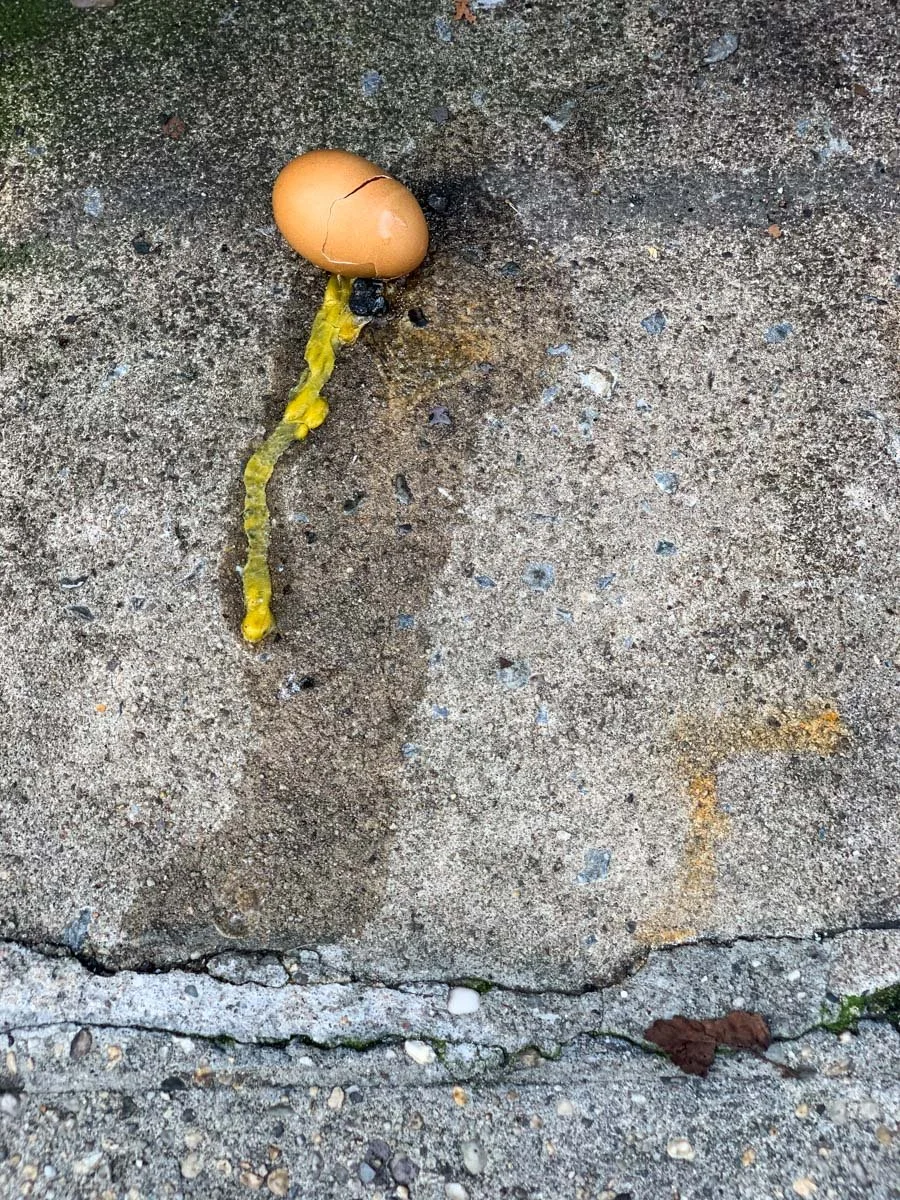
Midlife is a tricky time of both shedding and waking up. How can you become the new person you see on the horizon, while still holding on to the person you once were, and may not be ready to let go of? Change can be hard, but is inevitable if we want to evolve. New growth cannot happen without letting go of the old: whether that be accepting our aging bodies, or releasing the outdated false narratives that have been shaping our sense of self. Grief over times of endings can coexist with the excitement of rebirthing and new beginnings–this is the complicated beauty of womanhood and life. So while, yes, two parts of my body (and the stories they hold that inform my identity) are dying, the rest of me is quite busy outliving. And though the flow of my cycle will soon come to an end, the flow of my divine feminine power is only getting stronger. I feel my womb as full; fertile with the art of creation, and I transition into this new phase of femininity keenly aware that much new life is still on the way.
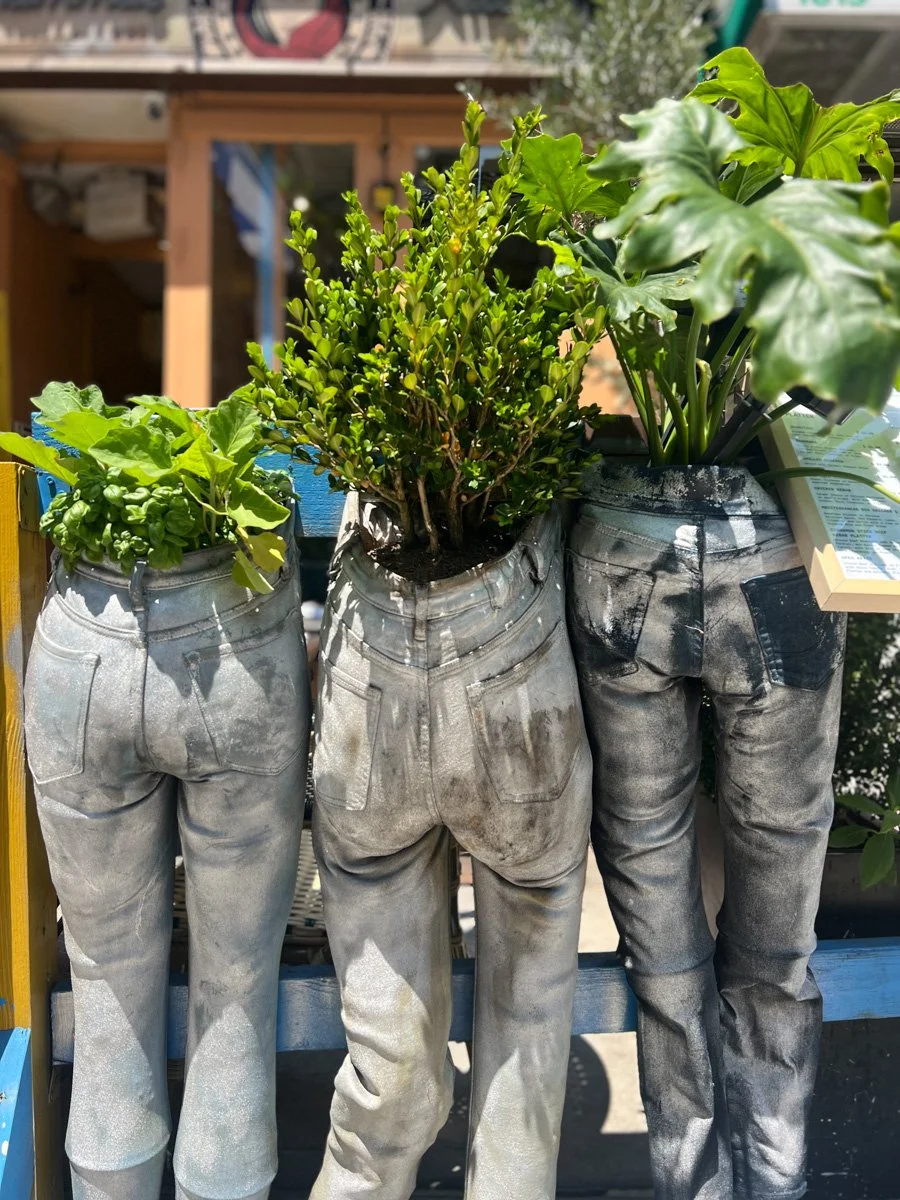
Though I personally went through a harrowing time of ups and downs, once I learned how to find balance in my body, I eventually arrived at a healthier place than I was in my younger years. Because the challenges of perimenopause forced me to look closely at and take better care of my body and mind than I had before, I actually now feel stronger than ever due to the changes I’ve made. So even though aging can be hard on our bodies (and as a woman in this phase you literally may never know what a day will bring), I have found great strength in the struggle, and have already begun experiencing the different kind of vibrancy and knowing I have been told resides on the other side of this transition.
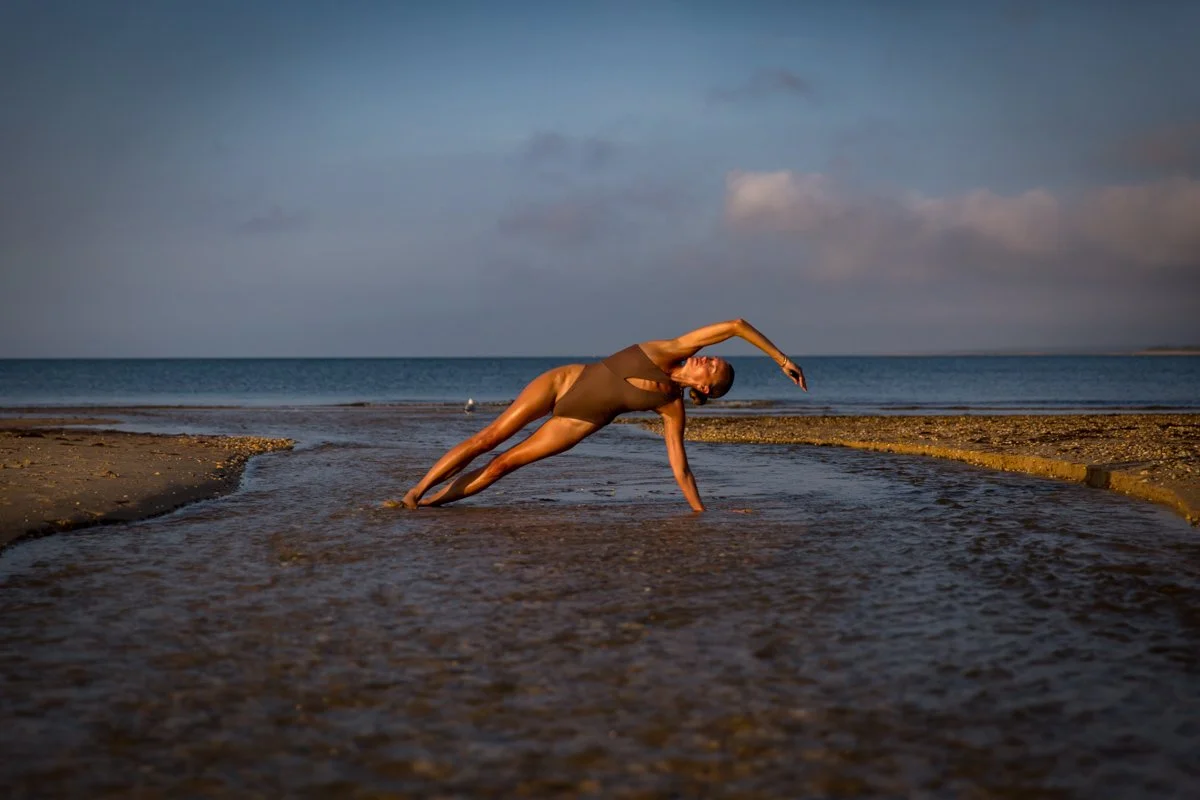
We can’t fight the changes that are happening in our bodies and lives during this time. It’s like swimming upstream: the harder we try, the more we suffer. Instead I focus on a daily practice: honoring a higher flow, and finding strength and balance by grounding in what is, while continuing to reach for more. Because as my midlife awakening and the sacred opportunity for rebirthing offered by the journey through menopause continues, I know just that: there is so much more.