Gifts From A Dark Night Of The Soul
Once upon a time, I was coasting along through what I had been calling a midlife awakening, when one fateful night unexpectedly redirected my course into midlife crisis territory instead. The release of a very personal book that had me feeling so much perfectionist pressure, changing identities and transitional phases of life at home, intense hormonal shifts and anxiety due to perimenopause, and long untreated OCD would culminate into a perfect storm, and I would suffer a massive panic attack that would leave me forever changed. I had entered a dark night of the soul. The night of the attack, I literally left my body, and it would take a while to return. I sought guidance from my longtime spiritual teacher, who informed me I was going through a painful yet necessary “cathartic healing crisis.” She assured me that what caused me pain gives me power, and that there is great power in knowing you can rebirth yourself over and over.
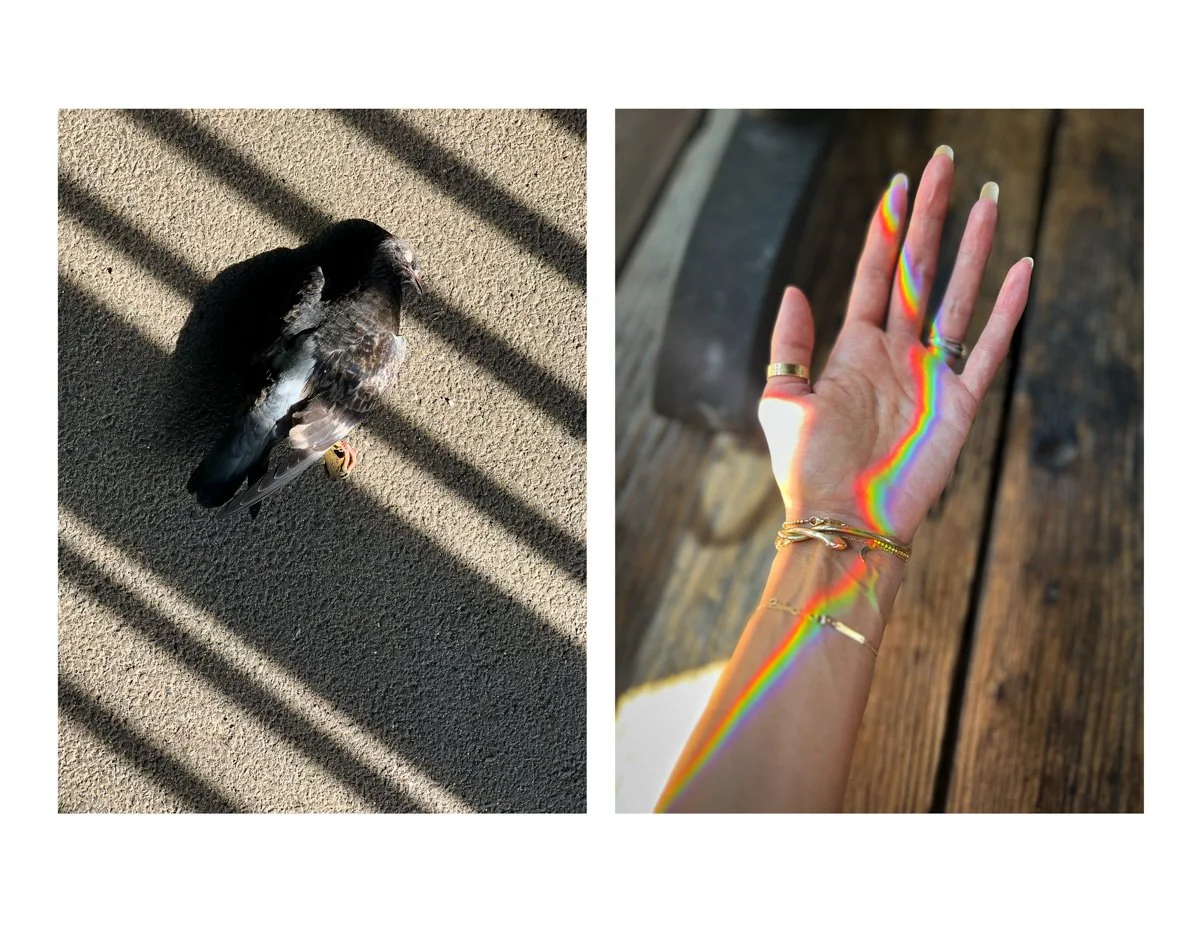
Fall in love with your shadows, and you find your light.

The art of sweet surrender.
So I embarked upon a great lesson in surrender. I spent the next year healing old wounds I did not know were still open, rewiring my brain, creating balance in my body, and looking fear dead in the eye. Instead of fighting fear, I learned to welcome and embrace it. I began a deep love affair with my shadow side, and I learned to fall in love with the darkest and most vulnerable parts of myself. It was some of the hardest work I had ever done, but eventually it became clear my crisis was actually a more epic midlife awakening than I could have previously imagined.
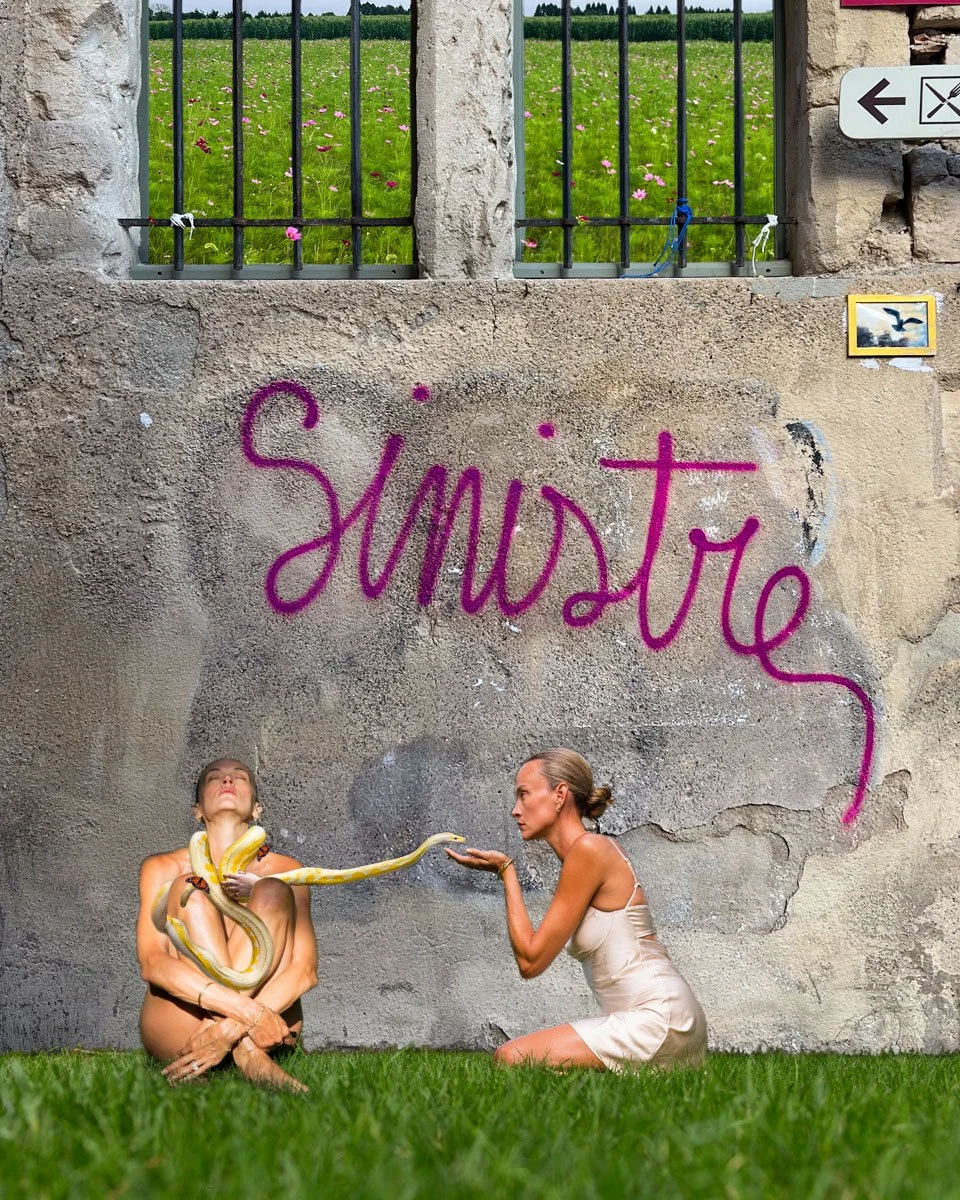
“Your fear is a teacher, not a terrorist.”

“Dearest Jamie, did you forget you have wings?”
Most of us are unconsciously walking through our daily lives with old wounds lurking just beneath the surface. With the intention to eventually invoke healing, you can trust the universe to make special deliveries in the form of people or circumstances that will rip those wounds wide open. They may even bring you to your knees. But do not be afraid. They are your teachers in disguise. Ask yourself, what is it you are meant to learn?

It was in the devilish wild of a dark night of the soul that I finally met her. She and her sneaky seduction had always been there, stalking me like prey from the shadows. But now she had me in a choke hold. Scratch and claw as I might, she was winning the fight. Until I realized: the fight was her fuel. She lost her power in my surrender; in truth and acceptance. Instead of fighting or running away, I became intimate with her intimidation. I looked deep into her eyes and told her I loved her–my fear, myself. I let her have her way with me; I asked her where she needed to go, and let her move through me. I gave my body over to her, and there she would reveal herself. I studied her wounds, her walls, and the stories that fed her false sense of power. I finally saw her for what she was; she only ever needed to be seen and held all along. The one I thought was trying to end me, was the only one who could wake me up from a spell I didn’t even realize I was under. It took time, but eventually we walked out of the dark wilderness hand in hand, embarking upon the most terrifying yet liberating love affair I have ever known.
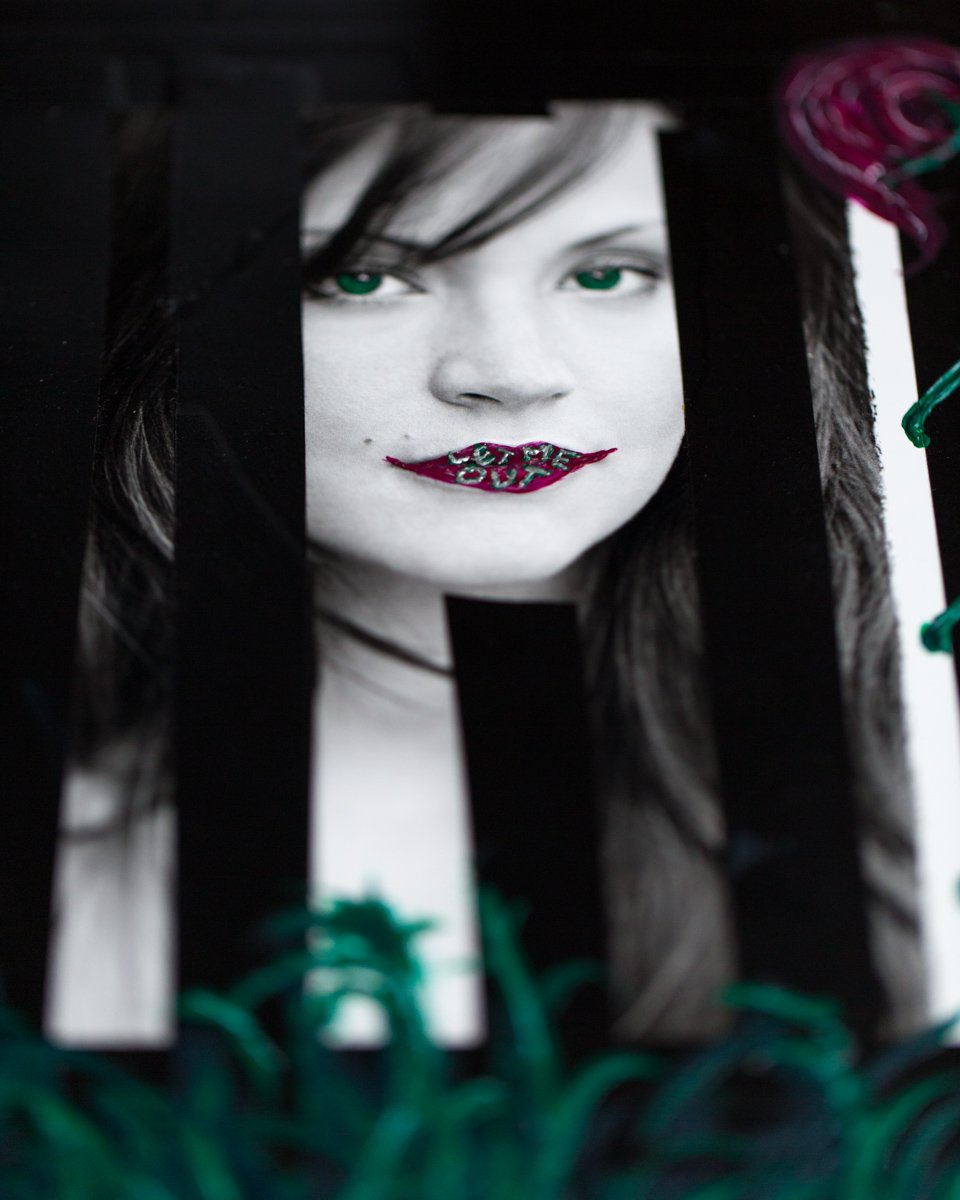
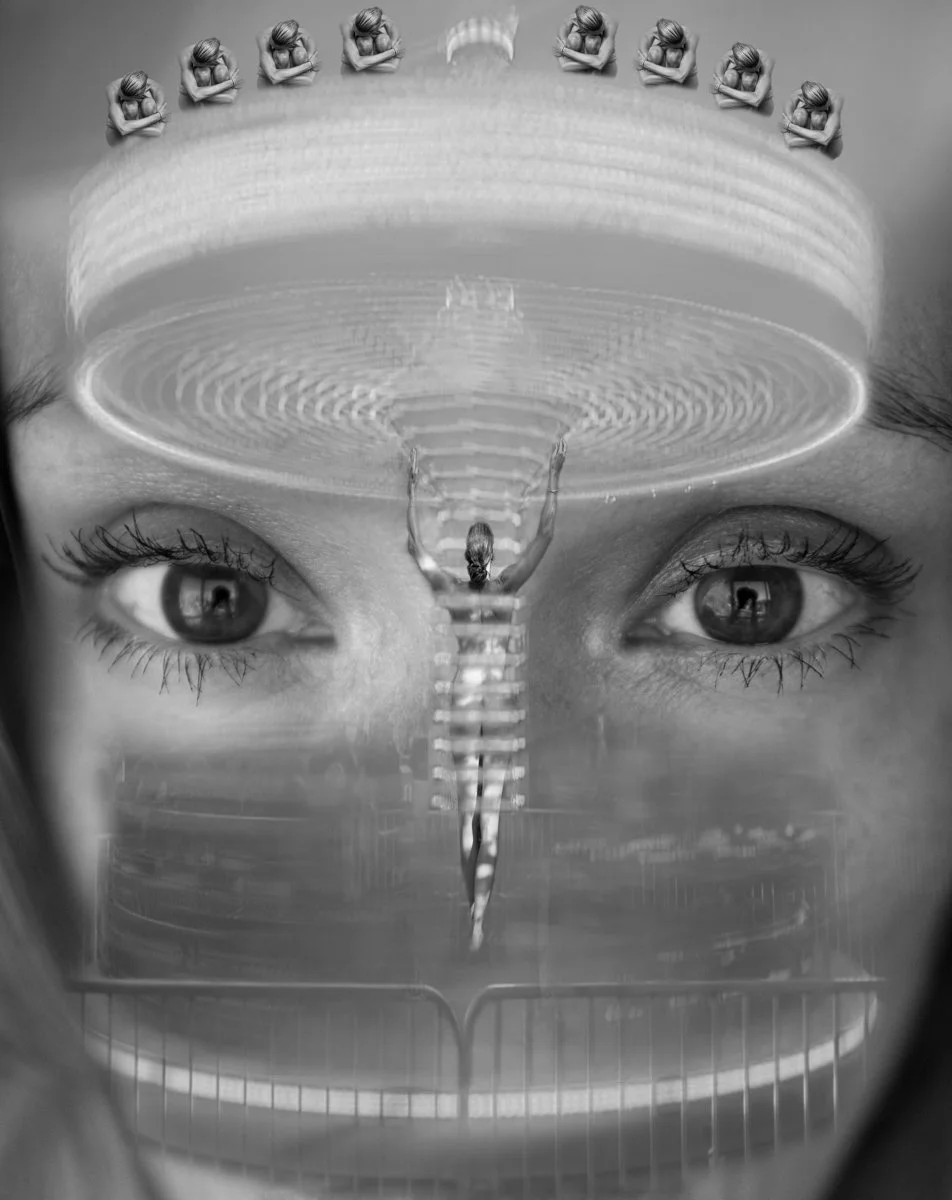
When You Just Want Off The Ride.
Having OCD can feel like you are stuck on a ride that you desperately want off of, but you can’t make the spinning stop. I have had OCD since I was a child, but only finally deeply examined and properly treated it as an adult. As with most disorders (or anxiety in general), OCD tends to flare up during stressful situations or major life events (both good and bad), and this image was made during the aftermath of such a time. Although I sometimes struggled, throughout most of my adult life I had been able to manage my symptoms myself (though I have now learned that I suffered much more than I had to), but this time around there was another factor at play that changed the game: perimenopause. The hormonal hijacking that was occurring in my body had stripped a layer of resilience from me. I was lacking the natural reserves I usually had to keep my emotions, anxiety, and therefore OCD at bay, so this time was different. I came to realize I needed help getting out of the painful loop of intrusive thoughts, and I was not afraid to ask for it. Nor am I ashamed to admit all of this now. I had too many important, wonderful things and people to show up for in my life, all deserving of the best version possible of me. So I began therapy, became intimate with my feared self, and learned how to re-wire my brain at 46 years old.
To be fair, my mother tried to send me to therapy at 12 or 13 when intense symptoms erupted after experiencing the death of a friend while also going through my own medical trauma. I sat face to face with the therapist and refused to speak a word. Did I need the help then? Yes. Did I cooperate? No. I don’t know if it was shame, fear, or just good old fashioned teenage rebellion that kept me from speaking. But when I get a twinge of self doubt about sharing my experience now as an adult for fear of being judged, I think of scared, closed off 13 year old me, and I feel confident knowing I am doing right by her by– although it still exists–no longer allowing myself to be governed by fear. I’m proud that she, and my own children now, can see that I have learned to heal by sharing my truths and my heart, even when it’s hard. No one should ever suffer alone or in silence, and getting help when you need it is not a sign that you are weak or incapable, quite the opposite. I believe the most courageous thing a person can do is face their fears, and that exploring the places where we are most vulnerable is where we find our greatest strengths, providing the chance to become a better version of ourselves than we ever thought we could be. Mental health is an open discussion in my household, and I hope to model for my children that you are never too young or too old to gain a deeper understanding of yourself and how your own unique brain works, and to honor that knowledge.
OCD lives in the imagination. That same powerful imagination that can be our worst enemy, can also be the cause of our most beautiful creations, making those with OCD some of the most wonderfully complex, deeply feeling, creative, caring, extraordinary creatures on earth. I’m so thankful for the work I have done in therapy. It’s been liberating. I’ve learned to manage, embrace, and not fight how my brain works, so instead of being trapped on the mental merry-go-round, I can be free to enjoy the great ride that is life instead.
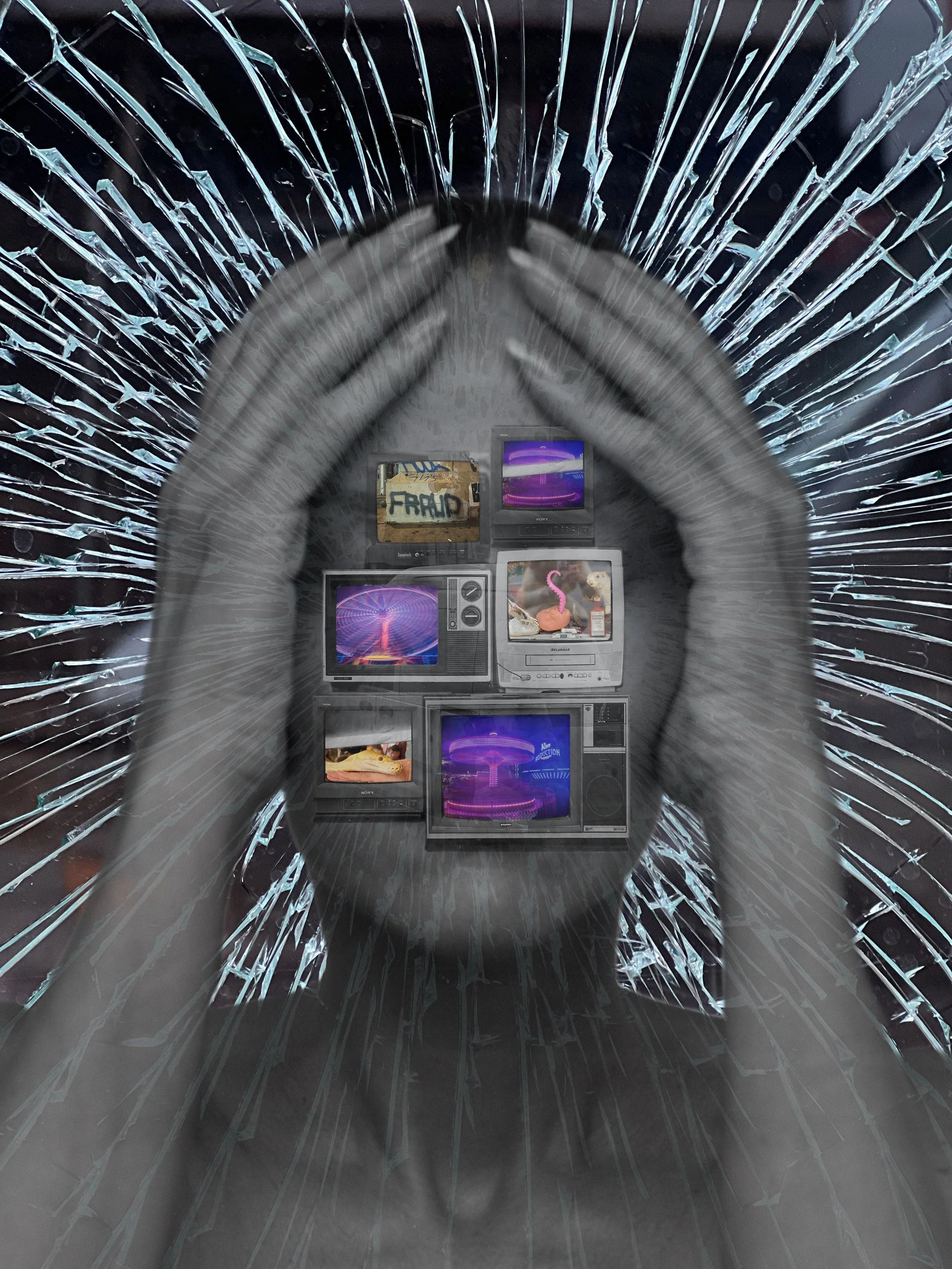
Not what you see on TV.
“I’m/they’re so OCD” is a popular phrase commonly used to describe someone who is uptight, organized, clean, likes things a certain way, etc. And while someone with OCD can very well present this way, it is important to understand true OCD is not about quirky habits, but goes so much deeper than that, and is often invisible. The disorder, whose title has become commonplace and is lightheartedly tossed around, is actually a terrifying, debilitating condition that goes far beyond the hand washing or organizational stereotypes portrayed on television or in movies. To be clear, I am not downplaying physical compulsions; they are serious and come in many forms. And don’t get me wrong–I have definitely been taken for a spin on the dance floor by a physical ritual or two in my day. But what most people don’t realize is that so much of OCD happens internally, and does not necessarily manifest in the external compulsions it is famously known for.
I myself only fully learned this in midlife after the previously mentioned fall into one of my most intense OCD loops to date (thank you perimenopause!). This flare-up led me to finally seriously study and properly treat my OCD in therapy for the first time in my life (even though I have had it since childhood). My eyes were opened to the inner workings of my own mind, and the terrible lies OCD had been telling me my whole life. OCD is a masterful manipulator, and threatens what a person loves the most; it preys on our beliefs, values, relationships, identities, etc., which is why it is so upsetting. The fear loop it creates results in feelings of immediate danger that are painfully real, even if in reality we are blessed and safe (the guilt around this fact could be a whole other essay).
Frightening and disturbing intrusive thoughts play on repeat. It’s as if your watching your worst nightmare on screen, and you desperately want to change the channel, but the scene just keeps replaying with the volume on full blast. In response, as a means of perceived (yet false) protection, come the compulsions. I have now learned just how many of them are invisible to the outside world, and that many sufferers are not even conscious they are participating in them because they are not as obvious as those that are physical (this can also make them trickier to manage). Mental compulsions can present as ruminating, checking, replaying conversations in your head, praying, confessing, and reassurance seeking as a means to gain certainty, feel safe, and find solutions to problems that are unsolvable.
While in a loop you often feel like it may never stop, and a diagnosis may feel intimidating-like a life sentence. But in actuality, accepting my brain for what it is, and learning the truth about how OCD actually works (not just what I thought I knew), helped me separate myself from it. I can now acknowledge what OCD is telling me is not real. I can watch what it’s doing and remind myself it really is just like a TV show after all–one I can observe but not star in or attach meaning to. I can see the preview coming, but press pause before the whole mental movie begins; and even if I can’t turn the TV off completely, I can hand my brain an Oscar for it’s creative genius, and turn the volume way down so I can live peacefully even if it’s still playing in the background. I share this because stereotypes (and the shame that stems from judgment caused by them) around OCD or any mental health disorder are damaging and dangerous. You could be sitting right next to a highly functioning human, who is actually caught in an agonizing mental trap and never know it. They could be like yours truly two years ago: the devoted mom attending every sports game making friendly conversation on the sidelines, showing up for work, family, and friends, meeting deadlines while running a busy household, hosting events, publicly promoting themselves, and even doing nerve wracking live TV interviews on the news all while secretly being held captive and tortured by the enemy in their own head. You never know what another human is going through based on outward appearances, and even further, without proper awareness, you may not know what you yourself are going through either.
I believe there are many people out there suffering silently from mental health issues they do not recognize, yet could get relief from if they were more informed. Knowledge is power, and choosing to understand and accept how your particular brain works is liberating. Self-study, while difficult, eventually led me to freedom from a kind of mental hijacking I had come to believe was the norm because I did not know any other way. I didn’t realize I could change many of my unhealthy patterns because they were not all manifesting as the obvious external symptoms that scream something’s wrong. Whether you have a diagnosis or not, we all have our issues, and mental health care needs to be a normalized and de-stigmatized part of all of our lives. We all deserve to be happy. Sometimes that takes work, but it is my belief it is the most important work we can do while we are alive. Heal yourself and heal others, love and be loved. There is nothing else. Without our mental health none of this is possible, it should be a priority to take care of it.
OCD is about doubt, and people with it are chasing certainty in the unknown. One of the greatest gifts my struggles have taught me is that I don’t need to have all the answers, perfect resolutions, or guaranteed emotional or physical safety. I can surrender to a higher flow, make mistakes, and get comfortable with discomfort; trusting I can handle whatever comes my way, contrary to what OCD (aka the voice of my feared self and ruler of self doubt) has to say.
There may often be a misconception that people struggling with their mental health are weak, but this couldn’t be further from the truth. People with OCD for instance, are living life everyday managing thoughts and feelings most people could never imagine, and functioning despite them. People with OCD specifically hold themselves to impossible moral standards. While our deeply loving, benevolent hearts are our gift, the flip side is that we care to the point it hurts. We feel guilty for things we didn’t choose or that didn’t happen, we over think everything, worry if we hurt or offended someone, said the wrong thing, weren’t honest enough. We worry about making a mistake that could hurt someone with an urgency others would never understand.
But while this makes life more challenging for us to deal with, it is also what makes us genuinely good people at heart, and some of the best friends, family, or lovers you could ever have in your corner, making the world a better place. We are choosing to be good and do right while fighting intense negativity and fear. This takes a certain kind of spirit and courage. I hold on to that knowing with pride, and I hope others who may carry shame, or struggle to love their uniquely beautiful neurodivergent brains, will remember to see themselves that way as well.